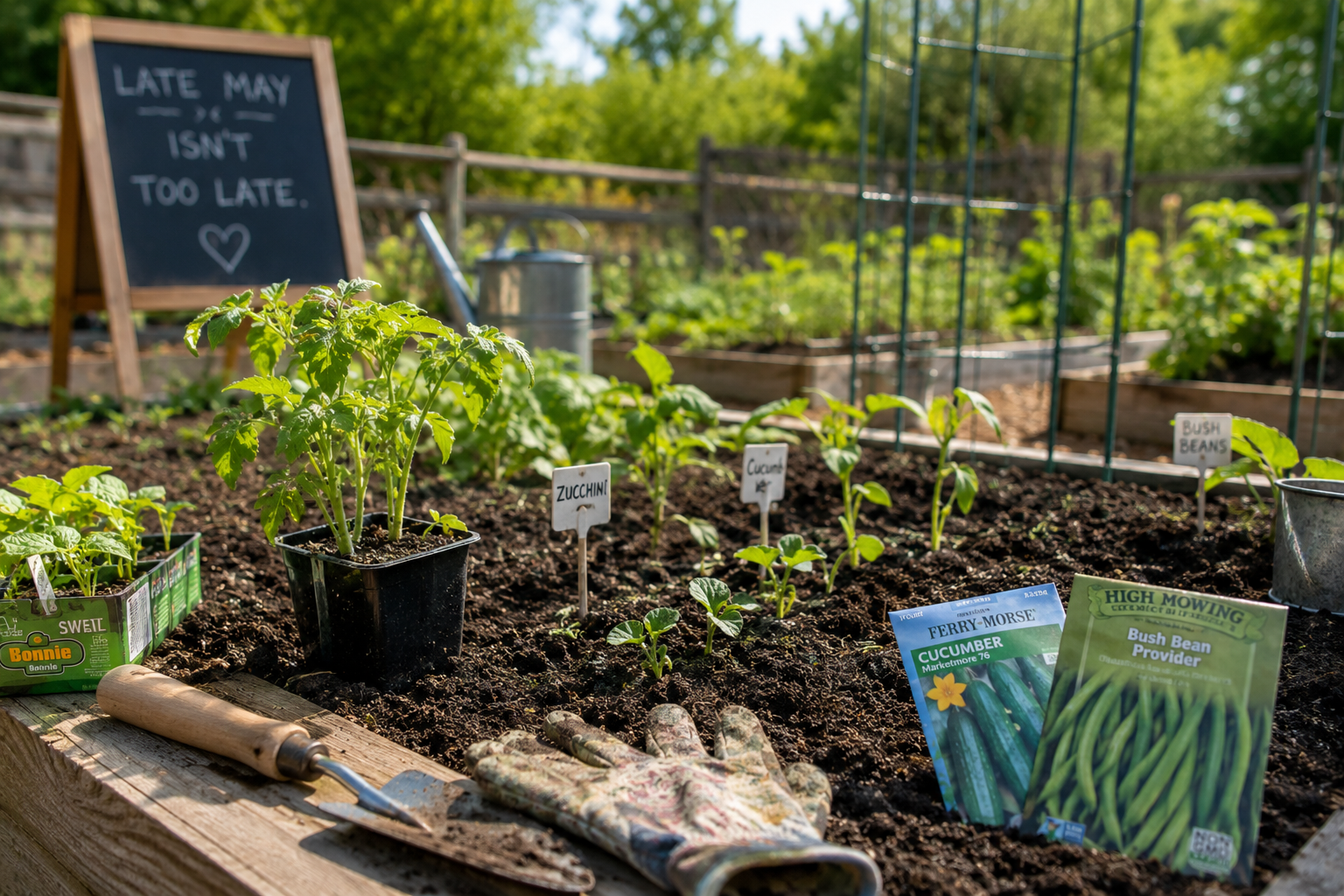
The Vegetables I Wish I’d Planted in May (A Mid-Season Catch-Up Guide)
Every year around Memorial Day, there are a whole lot of people standing in their backyard staring at empty garden beds feeling vaguely guilty about it. I know because I’ve been one of them more times than I’d like to admit. Back in March, when the seed catalogs show up and it’s still cold enough outside to make soup sound reasonable three nights a week, it all feels very possible. You think, “This is the year I’m going to stay ahead of things.”
Then life starts doing what life does. Somebody gets sick, work gets busy, it rains every weekend for a month straight, or you spend three Saturdays fixing something expensive you didn’t know was broken until water started dripping through the ceiling. Before you know it, it’s late May, the tomatoes at the nursery are already three feet tall, and your raised beds still look like a place the dog occasionally walks through.
The good news is you haven’t missed the whole season. You’ve missed part of it, sure, and there are a few things that probably aren’t worth fighting with now, but there’s still plenty you can grow if you start this week. In fact, some vegetables are happier planted now than they were back in chilly April when everybody was itching to get outside and put seeds in the ground too early.
One thing gardening teaches you after a few years is that nature does not care about your ideal schedule. The plants want what they want. Some crops love cool weather and some of them want the soil hot enough that you can walk barefoot across it without regretting your choices. Once you stop trying to force every vegetable into the same timeline, gardening gets a whole lot less frustrating.
What You’ve Probably Missed by Late May
Now, I’m not going to tell you that every crop is still a good idea because that’s how people end up watering bitter little lettuce plants through July out of pure stubbornness. Some spring vegetables are mostly finished by late May in a lot of the country, and you’re better off letting them go and circling back in the fall.
Peas are usually done unless you live somewhere unusually cool. Spinach tends to bolt once the weather heats up. Most lettuce gets bitter fast. Radishes get woody and mean. Broccoli and cauliflower generally stop cooperating once warm weather settles in for good.
Brussels sprouts are another one people try to force into spring timing, but honestly they’re usually happier as a fall crop anyway. They take forever, and by the time they’re ready the weather’s often miserable enough that everybody’s lost interest.
## The Crops That Actually Like Late May
The funny thing is a lot of warm-weather vegetables were never interested in your April enthusiasm in the first place. Back in early spring the soil was still cold, nights were dipping into the 40s, and the tomatoes were just sitting there looking offended.
Now the ground is finally warm enough for things to grow properly, and a lot of summer crops take off fast once they get those conditions.
Bush Beans
Bush beans are one of the best vegetables for people who feel behind because they grow quickly and don’t ask for much. You put the seeds in warm soil, water them consistently for a little while, and before long you’re picking beans faster than your family can eat them.
One thing I wish somebody had told me years ago is not to plant all your beans at once unless you enjoy processing fourteen pounds of beans during the hottest week of August. Plant one row now and another one in three weeks.
Can you plant bush beans in late May?
Yes. Bush beans grow very well when planted in late May because they prefer warm soil and summer temperatures.
Cucumbers
Cucumbers are another crop that genuinely likes warm weather. Once the nights stay warm consistently, they grow fast enough that you can practically watch them spread.
The main thing with cucumbers is mulch and water. Bitter cucumbers usually come from stressed plants, and stressed plants usually happen because the soil keeps drying out between waterings.
Zucchini and Summer Squash
You really only need one or two zucchini plants unless you’re feeding a very large family or planning to leave anonymous bags of zucchini on your neighbors’ porches in August like everybody else eventually does.
Late May is actually a perfect time to plant squash because the soil is warm and the plants establish quickly.
Pumpkins and Winter Squash
If you want pumpkins by fall, now’s the time to get serious about it. Most winter squash and pumpkins need somewhere around three months or more before harvest, and summer disappears faster than people think once July hits.
Okra
Okra is one of those vegetables that doesn’t even wake up properly until the weather gets hot enough to make everybody else complain. If you live in the South or anywhere with long summers, late May is excellent okra planting time.
Sweet Corn
You can still plant sweet corn in a lot of places if you’ve got enough frost-free days left, but corn does better in blocks than skinny little rows. That’s because the wind pollinates it, and a tiny row usually leaves you with disappointing ears missing kernels all over the place.
Sunflowers
Sunflowers are one of the easiest ways to make a garden feel cheerful fast. Kids love them, bees love them, and they’re forgiving enough that even people who claim they “kill every plant” usually manage to grow them successfully.
Carrots
Carrots can still be planted now, although they need patience in the beginning because they germinate slowly and they hate drying out while they’re sprouting.
The Things You Should Probably Buy as Plants Instead of Starting from Seed
By late May, there are some crops where buying transplants just makes more sense. You don’t get extra points for making gardening harder than necessary.
Tomatoes are one of them. Buy healthy plants from the nursery and move on with your life. Look for shorter, sturdier plants instead of giant floppy ones that already look exhausted from living in a tiny plastic pot.
Peppers are another crop I’d buy as starts this late in the season. Same with eggplant. Basil too, honestly.
Mulch Is Probably the Most Important Thing You’ll Do
If I could go back and give beginner-gardener me one piece of advice, it would probably be to mulch earlier and more aggressively.
Bare soil dries out fast once summer heat settles in, and keeping unmulched garden beds watered through July becomes a tiring full-time responsibility.
Using grass clippings from your yard is an easy and cost effective way to mulch your plants to keep the moisture in.
Water Deeply Instead of Constantly
A lot of new gardeners water too lightly and too often. It feels responsible, but shallow watering trains roots to stay near the surface where they dry out quickly.
It’s better to water deeply a couple times a week so the roots grow downward looking for moisture.
Don’t Forget There’s a Fall Garden Too
One of the best things you learn after gardening for a few years is that summer isn’t the end of the growing season. Around mid-to-late July, you can start planting again for fall harvests.
That’s when you circle back to things like kale, broccoli, spinach, lettuce, carrots, turnips, and beets.
The Honest Pep Talk
Your garden does not have to be perfectly timed to be worthwhile. By August, nobody’s going to care that your tomatoes went in three weeks later than planned.
And really, that’s the thing about gardening. It rewards people who keep showing up more than it rewards people who do everything perfectly. A slightly late garden that actually gets planted will always feed you more than the imaginary perfect garden you never started.
Is it too late to plant vegetables in late May?
No. Many warm-weather vegetables like beans, cucumbers, squash, corn, and okra grow very well when planted in late May or early summer.
What vegetables grow best in summer heat?
Beans, okra, cucumbers, squash, sweet potatoes, peppers, and sunflowers all thrive in warm summer temperatures.
Can you still plant tomatoes in late May?
Yes. Tomato transplants planted in late May can still produce excellent summer harvests in most growing zones.
What vegetables should not be planted in late May?
Cool-weather crops like spinach, peas, lettuce, broccoli, and cauliflower often struggle in late spring heat and are usually better planted for fall harvests.
What is the easiest vegetable to grow for beginners?
Bush beans, zucchini, cucumbers, and sunflowers are some of the easiest and most forgiving crops for beginner gardeners.